
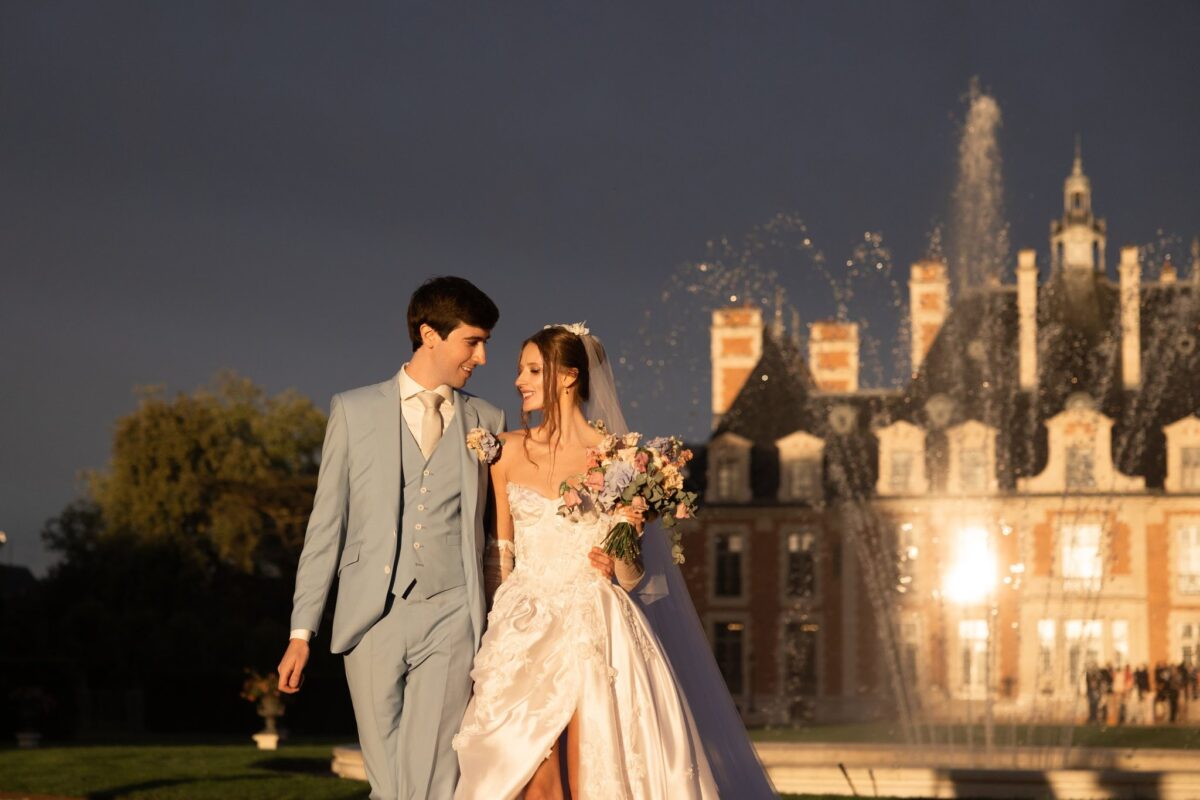
Planning a wedding in Paris often means bringing together much more than just two people. Families may travel from different countries, guests may speak different languages, and each side of the couple may have its own traditions and way of expressing emotion.
For international couples, a bilingual wedding ceremony in Paris can therefore feel like the natural choice. But there is one common concern: how do you make everyone feel included without translating every sentence and turning a heartfelt ceremony into something repetitive?
The answer is not to say everything twice. A beautiful bilingual ceremony is about creating balance.
Choose a Main Language for the Ceremony
A bilingual ceremony does not necessarily need to be divided equally between two languages.
In most cases, choosing one main language helps the ceremony remain fluid. This can be the language understood by the majority of your guests, or simply the language in which you both feel most comfortable expressing your story.
The second language can then appear at meaningful moments throughout the ceremony.
As an English-speaking wedding officiant in Paris, I often work with couples whose families come from different countries. My role is not simply to translate words, but to make sure everyone understands the emotion and meaning behind the ceremony.
Decide Which Moments Should Be Bilingual
Rather than translating an entire ceremony word for word, it is often more elegant to select a few key moments.
The welcome, for example, can include both languages so that every guest immediately feels acknowledged. A short introduction can explain that different languages will naturally be woven into the ceremony.
Readings are another wonderful opportunity. One family member might give a reading in French while another shares something in English. Personal vows can also be spoken in the language that feels most natural to each partner.
Even a simple sentence addressed directly to one side of the family can create a strong feeling of inclusion.
The objective is always the same: every guest should feel part of the moment without interrupting the natural rhythm of the ceremony.
Your Vows Do Not Have to Be in the Same Language
One of the most personal parts of a wedding ceremony is the exchange of vows.
For international couples, there is no rule saying both partners must speak the same language. You may decide to write your vows in English, French, Spanish or in the language that best expresses what you want to say.
Some couples even choose to add one final sentence in their partner’s native language. It can be a simple detail, but often a very emotional one.
What matters most is authenticity. Your vows should sound like you rather than like a translation.
Include Your Cultures, Not Only Your Languages
A multilingual wedding is not simply about vocabulary.
When two families or nationalities come together, the ceremony can also reflect their different cultures. This might involve a family tradition, a symbolic ritual, a reading, a piece of music or a story that has particular meaning.
A personalized wedding ceremony in Paris can give you the freedom to combine these elements naturally rather than following a rigid format.
The aim is not to include every tradition possible. It is to choose the ones that genuinely represent you as a couple.
Keep the Ceremony Natural and Easy to Follow
When several languages are involved, structure becomes particularly important.
Guests should never have to wonder what is happening or feel that they are listening to the same ceremony several times. Clear transitions between languages help keep everyone engaged while maintaining the emotional flow.
That is where preparation with your celebrant becomes essential.
Before the wedding, I take time to understand your story, your families, the languages spoken by your guests and the atmosphere you want to create. Together, we can decide where changing languages makes sense and where it would simply interrupt the moment.
Choose an Officiant Who Understands International Weddings
For a destination wedding, speaking the language is only part of the job.
Your officiant should also be comfortable communicating with international families, adapting the ceremony to different cultures and finding the right balance between emotion, elegance and clarity.
Being fluent in French, English and Spanish allows me to create ceremonies where languages can move naturally from one to another while keeping the couple at the heart of the experience.
You can discover more about my work as a Paris wedding officiant services and the personalized ceremonies I create for couples coming to celebrate their wedding in France.
A bilingual ceremony should never feel like two separate ceremonies happening at the same time.
When it is thoughtfully written, the different languages become part of the story itself — bringing two families, two cultures and sometimes two sides of the world together in one unforgettable moment in Paris.

Planning your ceremony in France?
Tell me your date and your story. I read every message myself and write back personally within 24 hours.
Get your personal quote within 24 hours