
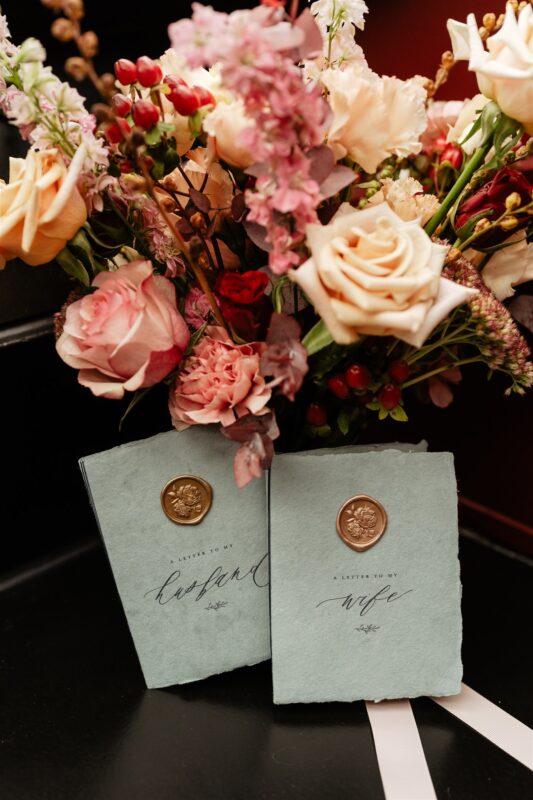
Introduction
Crafting meaningful wedding vows is one of the most intimate and significant moments in a ceremony: it’s the moment when you speak directly to your partner, promise a shared future, and move beyond mere formality into heartfelt commitment. Whether you’re planning a civil ceremony, a religious service, or a personalized humanist celebration, the words you choose can anchor the memory of your day, resonate with your guests, and reflect the depth of your relationship. In this guide, you’ll discover how to write vows that feel genuine, emotionally powerful, and aligned with your unique love story. We’ll walk step by step through reflection, drafting, editing, practicing, and delivering vows—plus provide examples, dos and don’ts, tips for different ceremony styles, and ways to avoid common pitfalls. Whether you’re beginning with a blank page or fine‑tuning already‑written promises, this guide gives you actionable advice to make your vow exchange truly memorable and heart‑touching.
I’ve been witnessing coutless vows exchanges, and here’s my personalised guide to creating the most personal wedding vows for your wedding ceremony. Let’s dive in!
What Are Wedding Ceremony Vows?
Wedding ceremony vows are the spoken commitments each partner makes during the ceremony to love, support and live in shared purpose with the other.
“Vows” are the promises or oaths exchanged in a wedding ceremony—whether in a church, civil setting, or bespoke celebration. These words serve both a symbolic and practical role: they declare your intent, your values, and your vision for the marriage ahead. The process of writing and delivering them offers an opportunity for both introspection and public commitment.
Why Vows Matter
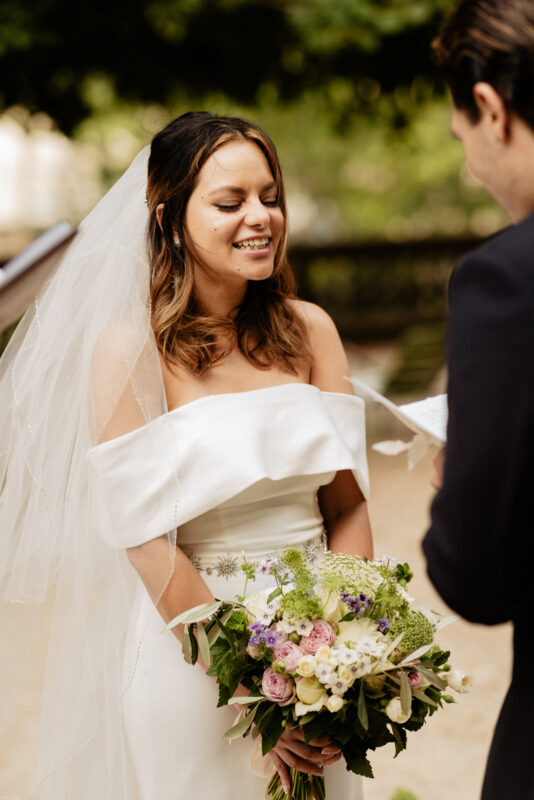
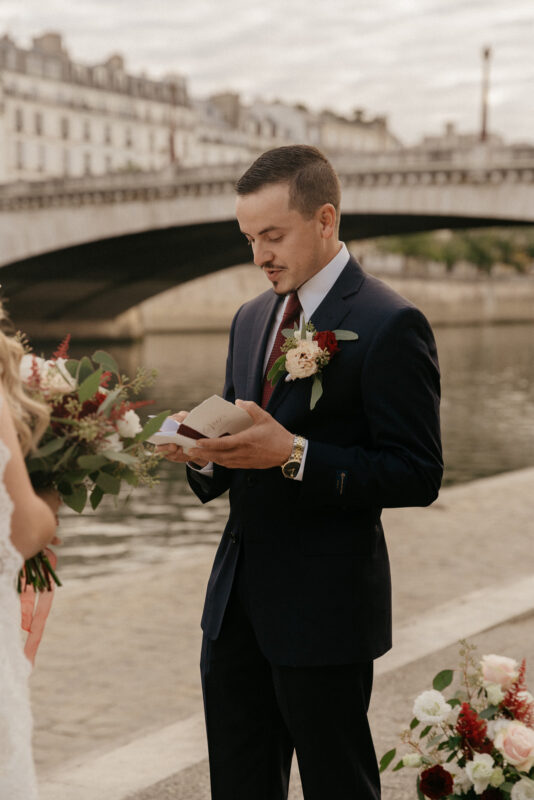
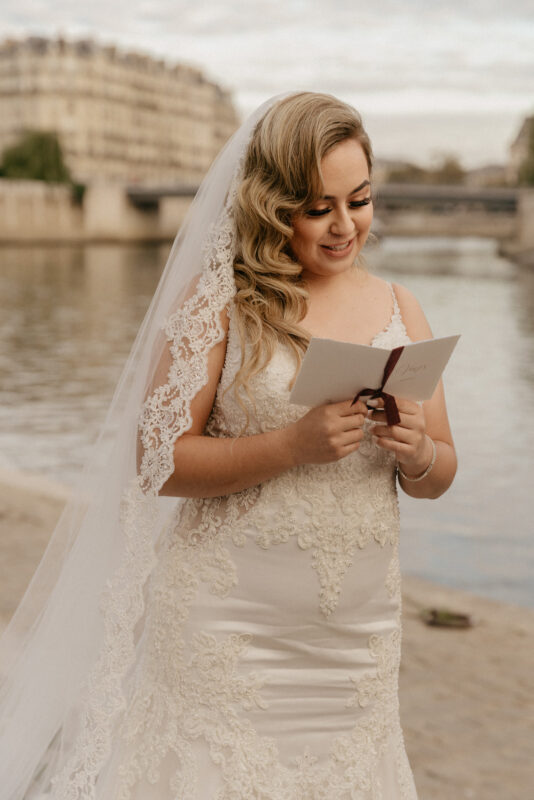
Emotional Significance
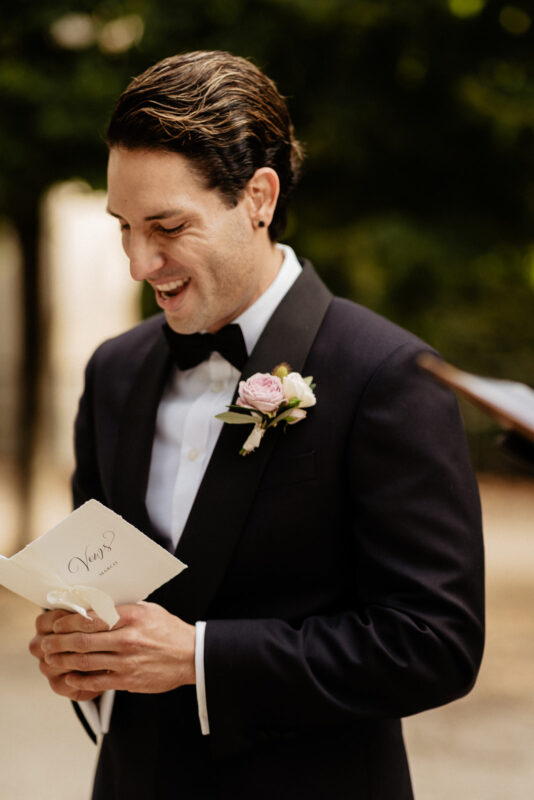
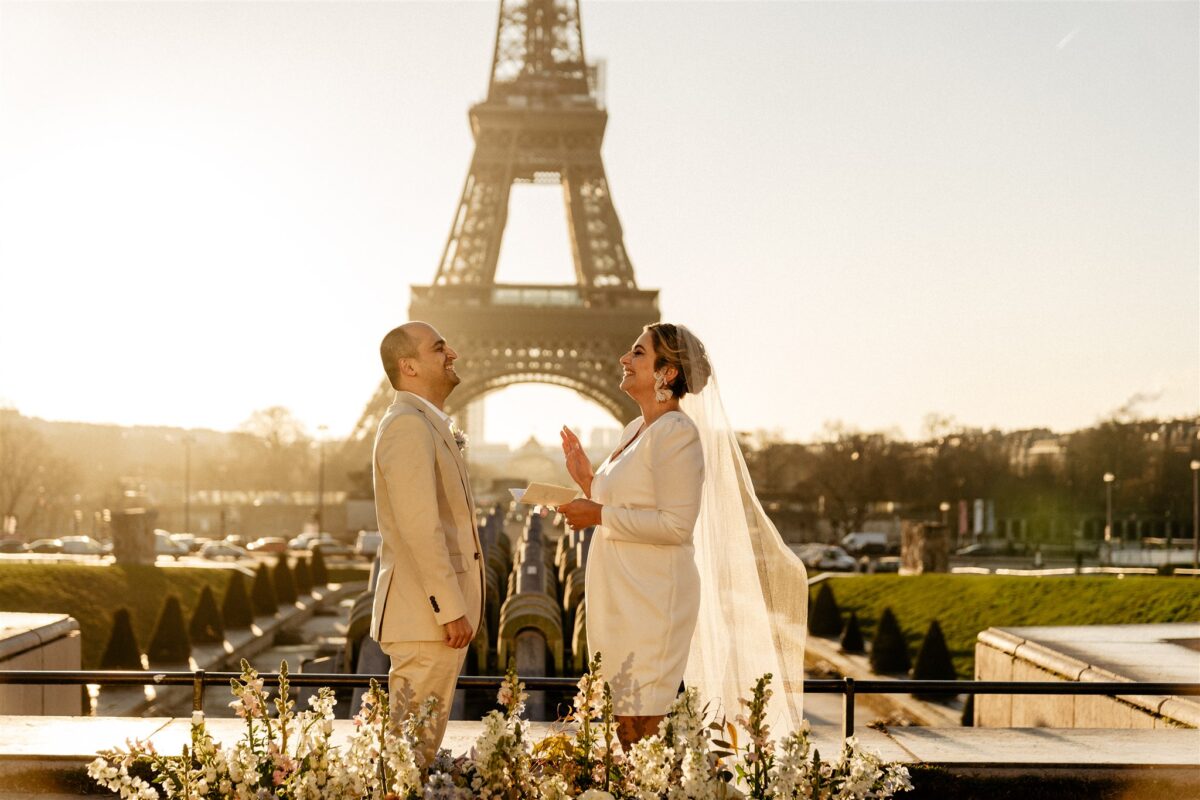
When you stand before family and friends and speak directly to your partner, those vows become a highlight of the day—emotions rise, memories form, and the words you say will be recalled for years. The best vows “come from your heart” and reflect connection rather than perfection.
Relationship Foundations
Writing your vows invites you to reflect on your relationship, how you’ve grown, and what you hope to build together. For example, the expert guidance from Esther Perel encourages couples to ask: What do you bring to the relationship? What does your partner bring? What kind of life do you want to build together?
Ceremony Impact
Your vows often mark the emotional high point of the ceremony. Guests remember the sincerity, the personal anecdotes, and the promises more than logistical detail. As one article says: “Of everything that I say on your wedding day, the words you say are the most important of the entire ceremony.”
Lasting Memory
Years later, couples often recall their vows as central to their wedding day experience. They also become a reference point for their marriage: you said this, now you live that. So crafting them meaningfully matters.
How to Prepare to Write Your Vows

Reflect on Your Relationship
Before writing, spend time reflecting. Ask yourselves and each other questions such as:
- How did we meet and when did I realise you were someone special?
- What qualities in you I admire most?
- How have we supported each other so far?
- What do I want our shared future to look like?
- What values do I want to promise to uphold?
These reflections are recommended by vow‑writing experts. estherperel.com+1
Agree on Tone and Format
Discuss with your partner the tone of your vows: traditional, poetic, humorous, short and sweet, or detailed narrative. It helps to align—one partner’s epic poem while the other gives a super‑short note can feel mismatched.
Set Timeline and Environment
Start early—at least several weeks before the wedding. As one guide notes, writer’s block and pressure increase if you leave it to the last minute. Find a quiet space, unplug distractions, and set a time when you won’t be rushed.
Gather Inspiration
Read vow examples, templates, and guides to help spark your creativity. But beware: inspiration is a springboard, not a script. Over‑copying risks sounding generic. Trust your gut instinct. It’s your wedding day after all.
Define Your Length
Vows typically last about one to two minutes when spoken. I know! It sounds so small! That translates to roughly 100‑250 words depending on pace. Starting with a word or time goal helps you manage content. Some of my couples often put some time in advance such as five minutes, but they often end up speaking less, in general.
Structuring Your Vows: Framework & Elements

A Solid Structure (Three‑Part Model)
Many seasoned officiants and vow‑writing guides recommend a three‑part structure:
- Who your partner is / what they mean to you
- Stories or reflections on your relationship and what you value
- Promises and future vision
Key Elements to Include
- Address your partner by name / nickname – make it personal.
- Statement of significance – “From the moment I met you…”
- Qualities you admire – what draws you to them even now. emmahelleur.co.nz
- Stories or examples – these anchor your words in lived experience.
- Promises – specific, meaningful, realistic. For instance: “I vow to keep making you laugh,” or “I promise to always…”. maeckweddings.com+1
- Shared future vision – what you’ll build together, how you’ll grow.
- Closing “I love you” or equivalent sentiment – many people highlight this as vital. I do too.
Tone & Voice Tips
- Be yourself: speak the way you talk (but a little more polished).
- Balance sincerity and vulnerability: real emotions resonate.
- Use concise language: avoid overly long paragraphs or complex metaphors unless that’s part of your style.
- Mix seriousness with lightness if that matches your relationship—humour can help but ensure it doesn’t undermine sincerity.
What to Avoid
- Avoid clichés like “you complete me” unless you really feel that and can make it personal.
- Avoid inside jokes that no one else will understand (unless you’re fine with guest confusion).
- Avoid overly long vows that will drag on and lose impact.
- Avoid guilt‑laden promises (“I’ll try harder…”). Instead, commit positively.
Tips for Cultural/Religious Sensitivity
If you’re having a religious or traditional ceremony, be aware of any required phrasing or expectations. For example, some texts specify or permit particular vow formats. Ensure your personal vows respect those traditions and communicate with your officiant if unsure.
Step‑by‑Step: Writing Your Vows
Step 1: Brainstorm
- Set aside 30–60 minutes. Pro tip : write your vows the night before you wedding day. Special vibe & inspiration. Guaranteed. Thank me later.
- Write down everything: your partner’s traits, your favourite memories, what you feel when with them, what the future holds.
- Don’t worry about order or grammar—just free‑flow. Write without thinking too much. Write a lot, edit later.
Step 2: Organise & Select Themes
- Review your brainstorm list and highlight key themes (e.g., “adventure,” “support,” “home,” “growth”).
- Select one or two themes to focus your vows around—it gives coherence.
Step 3: Draft the Three‑Part Structure
Using your selected themes, draft:
- A sentence or two of what your partner is to you.
- A short anecdote or memory that illustrates your relationship.
- Specific promises and a look ahead to the future.
Step 4: Refine and Polish
- Read aloud. Does it flow naturally? Is it ~1‑2 minutes?
- Remove redundancies, clarify vague phrases, tighten tone.
- Check for grammar or phrasing that might trip you up when speaking.
- If you include humour, ensure it lands and is authentic.
Step 5: Practice Delivery
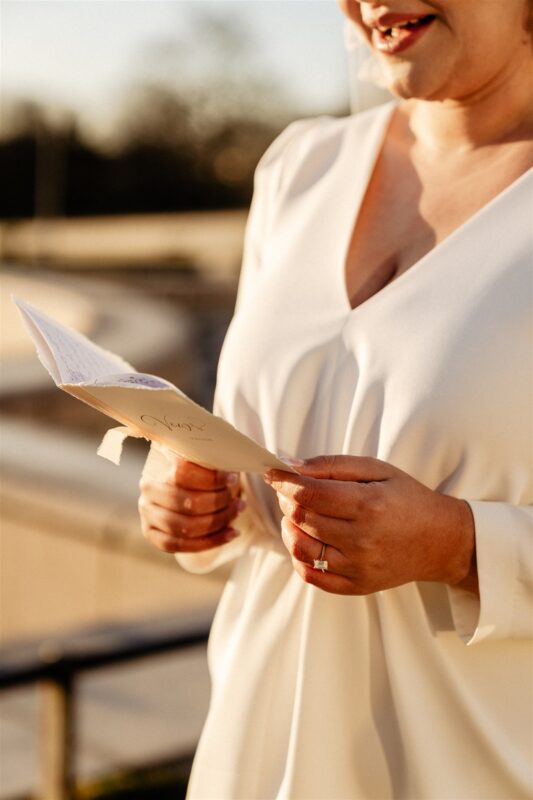
- Print or write a clean copy to bring to the ceremony.
- Mark pauses, breathe, look at your partner. You do not have to memorise fully. Don’t rush.
- Practice aloud at least once or twice in front of someone else or record yourself.
Step 6: Final Preparations
- Give your officiant (or person leading the ceremony) a copy if required.
- Ensure you have a backup copy in case of nerves, tears, or wind!
- On the day: slow down, breathe, look at your partner, let emotion show. The sincerity will dominate.
Examples of Vows That Touch Hearts
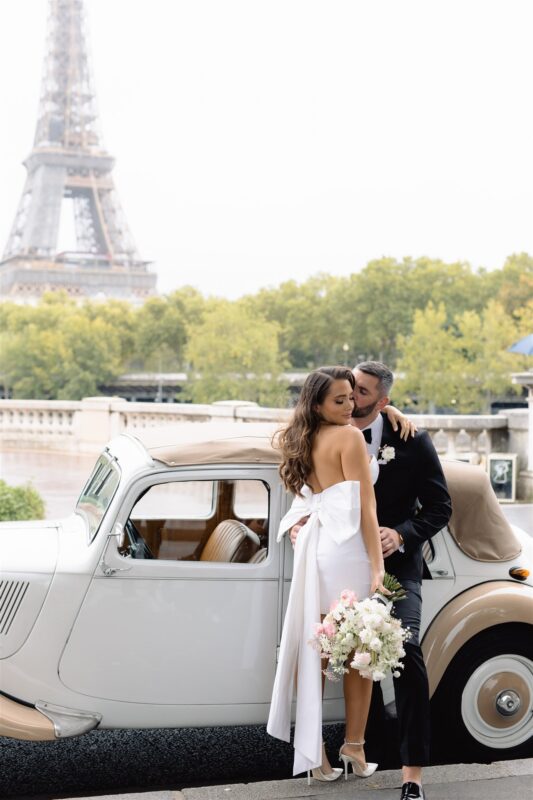
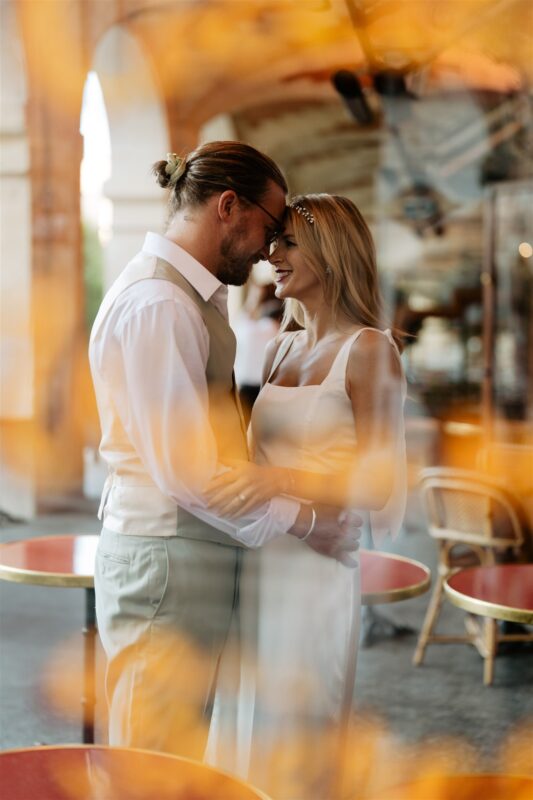
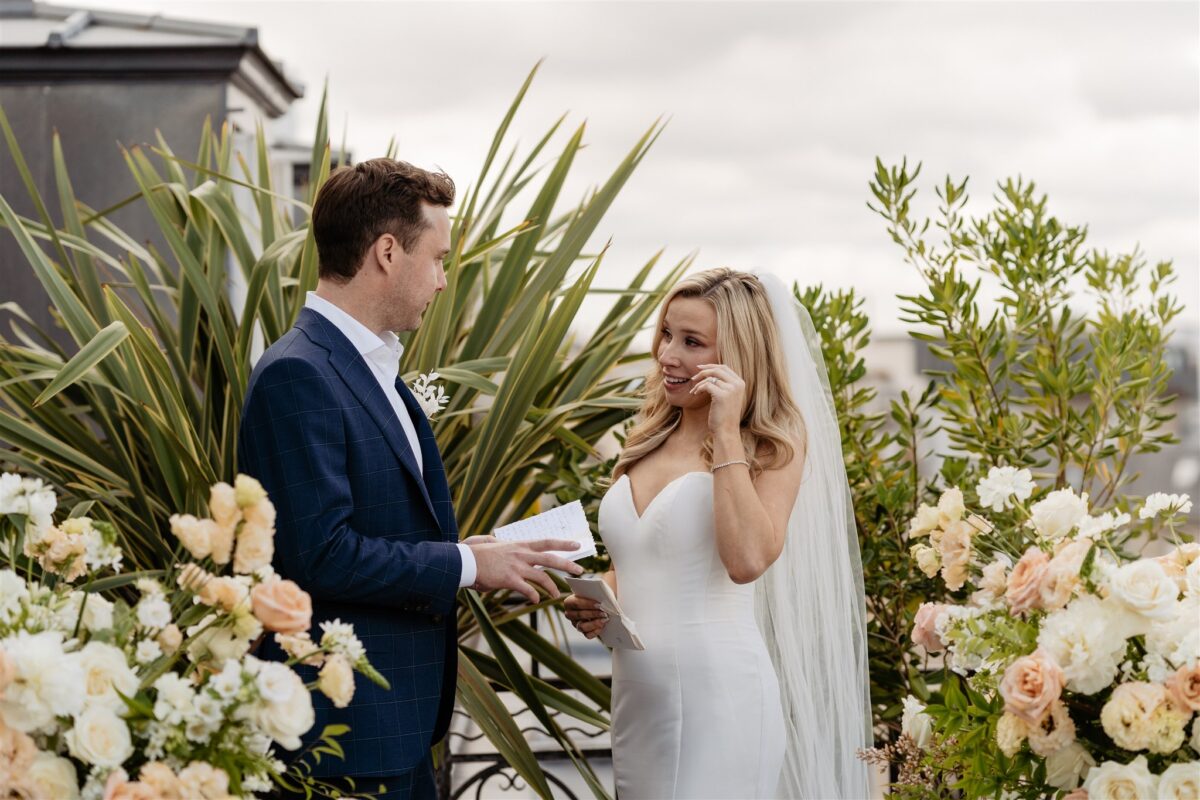
Here are some sample segments you might adapt or draw inspiration from. Feel free to personalise them deeply.
Example 1 – Simple & Classic
“Name, from our first coffee‑date to standing here today, you have been my best friend, my constant, my laughter and my calm. I promise to always listen when you speak, to walk beside you through sunshine and storms, and to build our home with compassion and joy. I love you, now and forever.”
Example 2 – Personal Story + Promise
“Your joy when you spot a hidden trail on our weekend hikes showed me how you see wonder in simple things. I promise to keep seeking those hidden trails with you, to support your dreams even when they change, and to cherish the small moments as deeply as the big ones.”
Example 3 – Humour + Depth
“I vow to let you have the last slice of pizza (though only sometimes), to laugh when your jokes fall flat, and to hold your hand when yours feels too heavy or the world too loud. In you I’ve found laughter, solace, and purpose. I promise to keep choosing you, again and again.”
Example 4 – Cultural/Spiritual Anchoring (Modify to Fit)
“With the love of our families and friends surrounding us, I take you as my partner in life. I promise to honour the values we share—kindness, curiosity, courage—and to walk with you in faith (or hope) through whatever life brings. You are my home.”
Why These Work
- They name the partner and the relationship explicitly.
- They include personal detail or story (hike, pizza slice, coffee‑date).
- They make promises that are concrete and meaningful.
- They reflect tone (humour, sincerity) that aligns with the couple.
- They are reasonably brief and speak to future as well as past.
You should feel comfortable adapting these to your own voice, story and ceremony style.
Tailoring Vows to Different Types of Ceremonies
Civil Ceremony
- Tone tends to be more flexible and personal.
- No specific religious language required (unless you want to include it).
- Consider including commitments that speak to how you’ll live together (e.g., “I promise to respect your opinions, to keep our home a place of laughter and honesty”).
Religious Ceremony
- Check with your officiant for required phrasing or thematic expectations.
- You may still personalise within or around the required structure.
- Use faith‑based language if meaningful (e.g., “with God’s help”, “in faith”, “through grace”).
Humanist / Non‑Denominational Ceremony
- Maximum flexibility—your vows can reflect values, mission, shared life rather than tradition.
- Use this as an opportunity to speak about what your relationship means rather than merely what happens day‑to‑day.
Multicultural or Interfaith Ceremony
- Be sensitive to blending traditions and inclusive language.
- You might incorporate small nods to each culture or faith (e.g., take a step of promise, share a significant object).
- Ensure you and your partner are aligned on what each wants included.
Renewal of Vows
- Although not your “initial” ceremony, if you’re doing a vow renewal, you can reflect on your journey: what you’ve learned, how you’ve grown, and renew your commitment accordingly.
Language & Translation Considerations
- If you or your partner speak different languages, consider writing vows bilingually or choosing one language and offering a summary in the other.
- Ensure correct spelling, especially for names, places, terms of endearment.
- Pronunciation practice is important if you include non‑native language words.
Dos & Don’ts at a Glance
Do:
- Be authentic to you as a couple.
- Use specific examples rather than vague statements.
- Keep the length appropriate (1‑2 minutes).
- Practice delivery and bring a backup copy.
- Use “I will” vs “I might” in your promises—stronger commitment.
- Communicate with your officiant about format, timing, and any switching between voices.
Don’t: - Don’t copy an entire vow from someone else—personalisation is key.
- Don’t overload with jokes that undermine the sincerity.
- Don’t cram in so many stories that you lose your promise section.
- Don’t ignore tone mismatch with your partner’s.
- Don’t rely entirely on memory unless you’re absolutely comfortable—reading is fine.
- Don’t stress about perfection—heartfelt words matter more than flawless prose.
Common Pitfalls & How to Avoid Them
Pitfall: Writer’s Block & Pressure
Solution: Start early, do free‑writing without judgement, break it into parts. Fashion Journal
Pitfall: Getting Too Long or Rambling
Solution: Set a word/time target (e.g., 150‑200 words) and stick to your three‑part structure.
Pitfall: Vows Too Generic
Solution: Use personal anecdotes and specific promises to anchor uniqueness.
Pitfall: Tone Doesn’t Match Partner or Ceremony
Solution: Discuss with your partner, maybe share rough drafts or broad outline.
Pitfall: Emotion Gets the Better of You On the Day
Solution: Have the text printed, ensure you’re comfortable with it, speak slowly, take a breath. Many officiants expect emotion; it’s normal. We’re used to it!
Pitfall: Forgetting Logistics (Officiant, Order, Timing)
Solution: Confirm with your officiant who speaks first, when the vow‑exchange occurs in ceremony order, and where you’ll stand/have your notes.
Pitfall: Not Practicing Delivery
Solution: Practice aloud, maybe in the space you’ll use, note how you’ll hold the paper, how you’ll look at your partner, how you’ll breathe.
Additional Enhancements & Custom Touches
Use of Symbolism
You might tie your vows into a symbolic action—ring exchange, sand ceremony, unity candle—mentioning it briefly in your vow can enhance the moment.
Inclusion of Guests or Family
While the vows are between you and your partner, you can acknowledge the presence of your support network. For example: “With our family and friends gathered here, I promise…”
Writing a Shared Statement
Some couples choose to read one vow together or merge a line each—this can reflect unity and shared voice.
Visual Aid or Keepsake
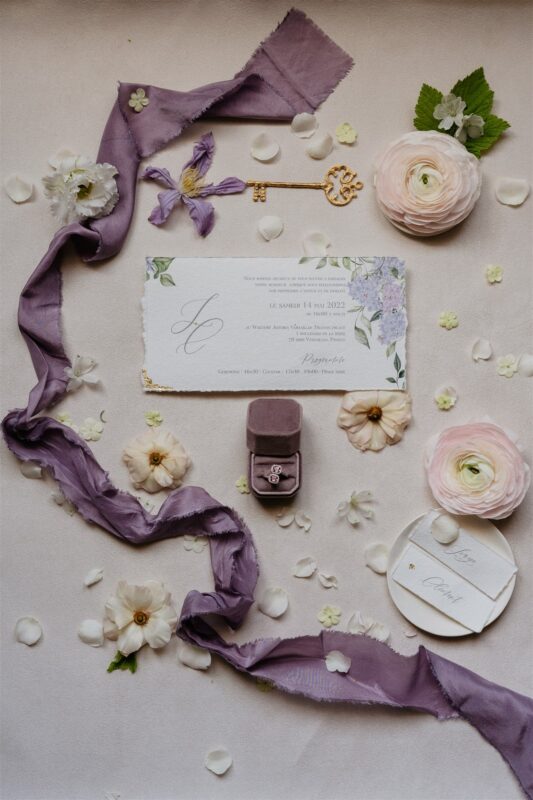
Consider printing your vows in a decorative format after the wedding as a keepsake.
Reference to Shared Mission or Values
If you and your partner share particular values (e.g., social justice, travel, family), mention how you’ll live these through your marriage: “Together we will…”
Humor With Heart
A touch of lightness can be powerful—if it suits you. But it should always anchor back to sincerity and promise.
Future‑Looking Sentiment
End with a line that points ahead: “I look forward to discovering what tomorrow holds with you” or “I promise to grow with you as we build our future.” This helps anchor beyond the moment.
Keep It Data‑Light
Avoid heavy lists of things you’ll do; instead pick 2‑3 key promises you can stand by. That makes the vow memorable and realistic.
Sample Vow Templates You Can Adapt
Feel free to fill in the blanks, modify tone, or combine elements from these templates to create your own unique version.
Template A – Traditional with Personal Flow
“______ (Partner Name), you are my best friend, my partner and my home. From the day we first [insert memory or event], I knew my life changed for the better. I promise to trust you, honour you, and walk beside you through all of life’s seasons. I will embrace your dreams as my own, hold your hand when days are dark, and celebrate you every day in the light. With all that I am and will become, I give you my heart and love, now and forever.”
Template B – Casual & Heartfelt
“(Partner Name), when I think of ‘home,’ I think of your smile, your laughter, and the way you always find the hidden café on a rainy day. I vow to keep seeking adventures with you, to support your ambitions even when they lead us off the map, and to always defend you (even when you’re wrong). I promise to laugh with you, comfort you, and grow with you. Today, tomorrow, and all the tomorrows after, you have my word, my heart, and my love.”
Template C – Short & Sweet
“(Partner Name), standing here with you feels right in every way. I choose you. I promise to be your partner, your confidant, and your greatest fan. Together we will build a life filled with kindness, joy and patience. I love you—and I will keep choosing you, every single day.”
You may prefer one of these templates as a starting point and then add your personal touches (stories, humour, specific promises) until it becomes uniquely yours.
How to Deliver Your Vows with Impact
Before the Ceremony
- Have your printed copy ready (make two—one for you and one spare).
- Place the paper on a sturdy card or clipboard so you can hold it easily.
- Keep a tissue or handkerchief nearby—emotions may rise.
At the Ceremony
- Stand facing your partner, hold the vows at a comfortable height.
- Speak slowly, clearly, and pause for effect (especially after key sentences).
- Make eye contact with your partner (even if reading).
- Breathe—especially if your heart is racing.
- If you get emotional, it’s okay—pausing and taking a moment is perfectly fine.
After Your Vows
- Smile, take a breath, hold your partner’s hand.
- Be present in the moment: your guests likely feel the emotional weight too.
- After the ceremony, consider preserving your vows (in a frame, journal, etc) as a memory and reminder of your promise.
What Vows Mean for Married Life
Your vows are not only for the ceremony—they hold weight for the years ahead. They can be referenced in anniversaries, in tough times, and in everyday life. When you promise “to listen when you’re tired” or “to keep seeking adventure,” you’re creating markers in your relationship. Living into those promises makes them real. Relationship experts emphasise that vows are not mere words but “mission statements” you and your partner commit to together. estherperel.com Whenever you review them (on an anniversary or in a quiet moment), you reconnect with your intention. In that way, they become part of your marriage’s foundation.
Adapting for French or International Weddings
If you’re planning a ceremony in France or for French‑speaking guests, consider the following:
- You may want to write your vows bilingual (French + English) so all guests understand. You know your audience. Choose wisely and trust your gut.
- Choose vocabulary that resonates for both of you: terms of endearment differ culturally (e.g., “mon amour,” “ma lumière”).
- My ceremonies are symbolic and carry no legal value. French administration is a nightmare and, for a couple coming from abroad, it is not worth it: most of my couples sign at home, before or after the trip.
- Tone: French ceremonies often emphasise elegance and romance, but personal authenticity still wins.
- If your partners’ families are from different countries, balance sentiments so both heritage voices are heard.
- Speak slowly, and if reading in another language, mark your text clearly to avoid mis‑pronunciation or stumbling.
- After the wedding, you can provide your guests with a printout of the vows (or a mini‑booklet) as a keepsake—this is increasingly popular in French weddings.
FAQs (Frequently Asked Questions)
Q: Do we have to write our own vows or can we use traditional ones?
A: You can absolutely use traditional vows if that aligns with your ceremony and values. Writing your own is optional but offers personalisation. Guides emphasise both options. Brides
Q: How long should our vows be?
A: Aim for 1 to 2 minutes each—and typically 100‑250 words depending on pace. Longer vows risk losing emotional impact. Fashion Journal+1
Q: Can we both read the same vow or one after the other?
A: Yes. Some couples read one vow together; others read separately. Decide what feels right for you and communicate with the officiant.
Q: Should we share our vows with each other beforehand?
A: Up to you. Some couples keep them secret until the ceremony; others share rough outlines. If you share too much, it may reduce the “unveiling” moment—but sharing broad themes can ensure tone alignment.
Q: What if I get too emotional or forget my lines?
A: That’s normal. Have your printed copy, pause if you need to gather yourself, and know your partner likely feels the same. Authentic emotions matter more than perfect delivery. Guides reassure that reading your vows is completely acceptable. People.com+1
Q: Do we need to give our vows to the officiant or register them?
A: Not with me. My ceremonies are symbolic, so there is nothing to register. You can keep your personal vows between you and your partner, or share a copy with me so I can cue them at the right moment.
Q: Where in the ceremony should the vows go?
A: Usually the vow exchange follows the welcome/reading and precedes the ring exchange. Check your ceremony order with your officiant. Brides
Q: Can we change our vows later (after writing)?
A: Yes. In fact, many couples fine‑tune in the days prior as they reflect more. Just ensure you don’t wait until the very last minute and risk chaos.
Q: What if one partner writes more elaborate vows and the other keeps theirs minimal?
A: It’s fine as long as both feel authenticity and sincerity. You don’t need to match word‑for‑word length, but discuss tone, seriousness, and style so you both feel comfortable.
Q: Should witnesses or guests hear the full text?
A: It depends on your preference—some couples print it in the program or share a summary, others keep it strictly between the couple. Personalising doesn’t require full disclosure.
Q: After the ceremony, what do we do with the vows?
A: Many couples keep a copy in a memory box, display them in a frame, or revisit them on anniversaries. They become part of your shared story.
Checklist Before Your Day
- Decide with your partner on tone, language, length and format.
- Brainstorm individually, select themes, and share high‑level ideas.
- Draft your vows using the three‑part model.
- Read aloud and time yourself. Adjust if too long/too short.
- Edit for clarity, specificity, authenticity. Remove filler.
- Print a clean copy (plus backup). Consider decorative formatting.
- Practice aloud at least once, maybe in ceremony environment.
- Give officiant your copy if required. Confirm order in ceremony.
- On the wedding day: breathe, speak slowly, look at your partner, believe in your words.
- After the ceremony: keep a copy, reflect on your promises, revisit them in future.
Following this checklist will help ensure your vow moment is emotionally powerful, authentic, and smoothly delivered.
Conclusion
Your wedding ceremony vows are more than words—they are a declaration of your love, values and commitment. When crafted with intention, rooted in your shared story, and delivered from the heart, they become one of the most memorable and meaningful parts of your day. By reflecting on your relationship, organising your thoughts into a structured format, writing with sincerity, practising delivery and staying true to your tone, you’ll give vows that touch hearts—your partner’s, your guests’, and most importantly your own. Remember: it’s not about perfection, it’s about presence and promise. Speak your truth, promise your best self, and let the moment resonate long after the ceremony has ended.

Pingback: An Italian Vow Renewal at Marignan Hotel Champs-Elysées - Paris Celebrant